Autumn Foraging Guide
There is something about fall that makes you want to slow down and pay attention. The light changes, the air sharpens, and the landscape shifts into something richer and more layered than the lush sameness of summer. It is also, if you know where to look, one of the most abundant seasons for foraging.
Autumn brings mushrooms, nuts, wild fruits, and herbs that are at their peak precisely because the conditions are right for them, cooler temperatures, damp soil, and the particular chemistry of a season in transition. Foraging in fall connects you to that rhythm in a way that feels genuinely satisfying, like you are participating in something rather than just observing it.
Before we get into specifics, a few things worth saying upfront.
A Note on Safety and Responsibility
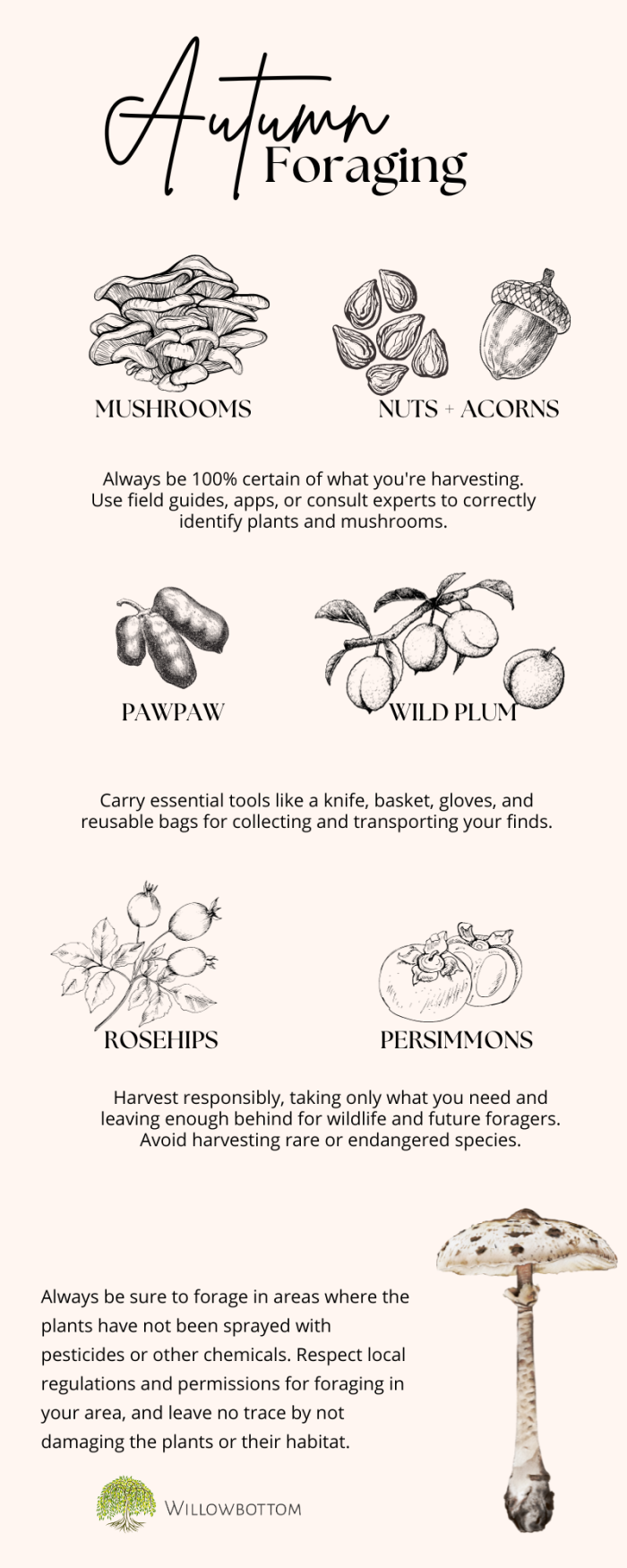
Foraging is one of those skills where confidence and competence need to grow together, and the consequences of getting it wrong with certain species, particularly mushrooms, can be severe. This guide is meant to be a starting point, an introduction to what is out there and what to look for. It is not a substitute for a good regional field guide, a foraging app with expert verification, or ideally some time spent in the field with someone who already knows what they are doing.
The rule that experienced foragers live by is simple: if you are not completely certain, you do not eat it. Not pretty sure. Not probably fine. Certain.
Also forage in areas that have not been sprayed with pesticides or herbicides, away from roadsides where runoff collects, and in compliance with whatever local regulations apply to your area. Take only what you will use, leave the rest, and do not damage plants or disturb habitat in the process.
Mushrooms
Fall is prime mushroom season across much of North America, and there are several choice edible species worth learning to identify well.
Chanterelles (Cantharellus spp.)
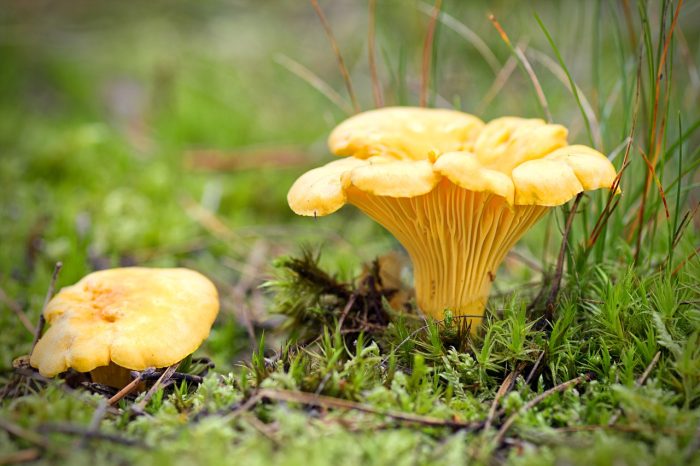
Chanterelles are among the most sought-after wild mushrooms, and for good reason. They have a warm golden-to-orange color, a distinctive vase or funnel shape, and a mild, fruity aroma that is often described as apricot-like. You will find them in wooded areas, particularly near oaks and conifers, often nestled in moss or leaf litter.
The most important look-alike to know is the false chanterelle, which can appear similar at a glance but has a few telling differences.
True chanterelles have forked, blunt-edged ridges on the underside that run down the stem rather than true, sharp gills. False chanterelles have proper gills that are more knife-like in appearance.
True chanterelles also tend to have a wavy, irregular cap with a slight depression in the center, while false chanterelles are more uniformly convex.
The fruity scent is one of the most reliable indicators. False chanterelles lack it.
Porcini (Boletus edulis)
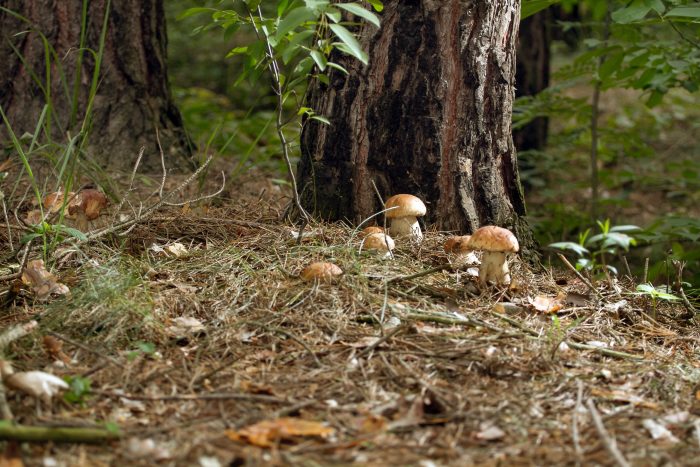
Porcini, also called king boletes, are large, impressive mushrooms with brown to reddish-brown caps and thick, bulbous stems. The underside features a dense sponge-like layer of small pores rather than gills, which is one of their most reliable identifying features. The pores are white when young and turn yellowish with age. The cap surface is slightly velvety and may develop a fine network pattern.
They grow under hardwood and conifer trees and have a nutty, deeply savory flavor that holds up well to cooking.
When distinguishing porcini from similar species, pay close attention to the pore surface.
Some look-alikes have pores that bruise blue or green when touched, which true porcini do not.
The spore print of true porcini is brown. If you are new to boletes, it is worth spending time with a field guide specific to your region before eating anything, as some bolete species are toxic.
Hen of the Woods (Grifola frondosa)
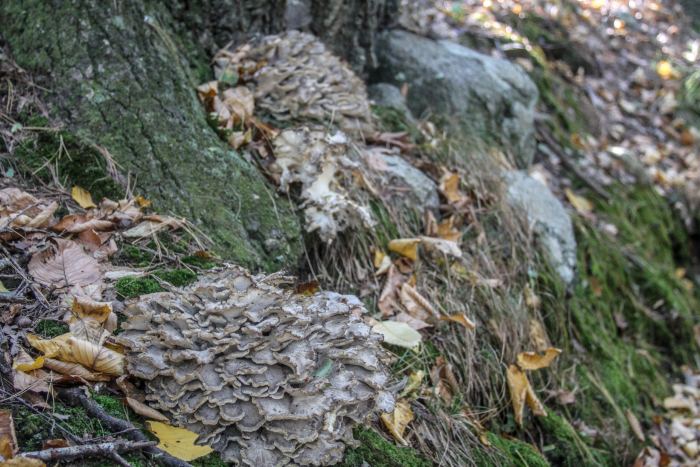
Hen of the woods, also called maitake, is a striking mushroom that grows in large clusters at the base of hardwood trees, particularly oaks. It looks like a layered rosette of overlapping fan-shaped caps, grayish-brown on top with a pale underside covered in fine pores rather than gills. The resemblance to ruffled feathers is what gives it the name.
It has a rich, savory, almost meaty flavor and is genuinely delicious roasted or sautéed. It is also one of the more studied medicinal mushrooms, with research suggesting benefits for immune function and blood sugar regulation, though it is primarily a culinary prize for most foragers.
There are false hen of the woods species, but most have noticeably different coloring, texture, or habitat. The clustered, ruffled appearance growing at the base of an oak is fairly distinctive. When in doubt, consult a local expert.
Lion’s Mane (Hericium erinaceus)
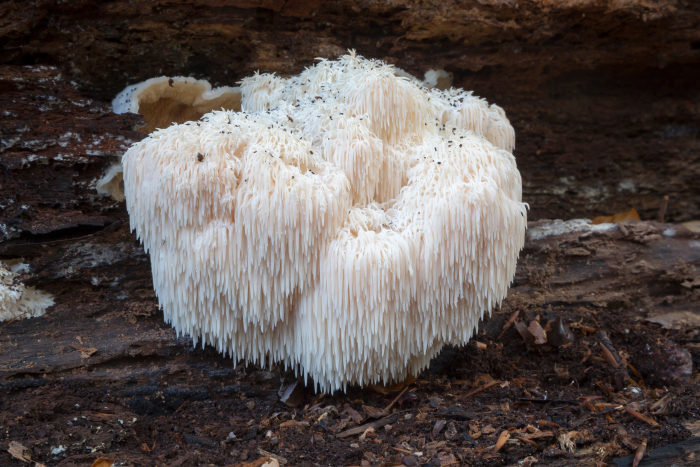
Lion’s mane is one of the most visually unmistakable mushrooms in the forest. It grows on hardwood trees, usually dead or dying ones, as a single white to cream-colored mass of long, cascading spines that look genuinely like a shaggy mane. There is nothing else quite like it, which makes it one of the more beginner-friendly mushrooms to identify.
The flavor is mild with a texture that is often compared to crab or lobster, making it popular as a seafood substitute in plant-based cooking.
Lion’s mane has also attracted significant scientific interest for its potential neurological benefits. Some research suggests it may stimulate nerve growth factor production, with possible implications for cognitive health, though the science is still developing. There are related Hericium species like bear’s head tooth fungus and coral tooth fungus that can occasionally be confused with lion’s mane, but all Hericium species are edible, so misidentification within this genus is less of a concern than with many other mushrooms.
Also Read: The best coffee substitute
Chicken of the Woods (Laetiporus spp.)
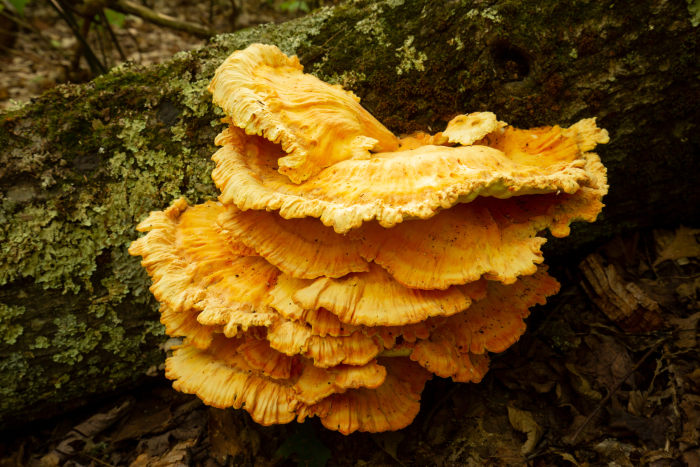
Chicken of the woods is another mushroom that tends to announce itself. It grows in large, bright orange and yellow shelf-like clusters on hardwood trees and is hard to miss. Young specimens have a firm, meaty texture and a mild flavor that genuinely does resemble chicken, which is why it is popular as a meat substitute.
The main look-alike to be aware of is the jack-o-lantern mushroom, which is toxic and also bright orange, but grows in clusters from the ground or from buried wood rather than directly on a tree trunk, and has true gills on the underside rather than pores. Harvest chicken of the woods while it is still young and tender. Older specimens become tough and woody and are not worth eating.
Some people do experience digestive sensitivity to chicken of the woods, particularly when it grows on certain tree species like locust or conifer, so start with a small amount the first time you try it.
Oyster Mushrooms (Pleurotus spp.)
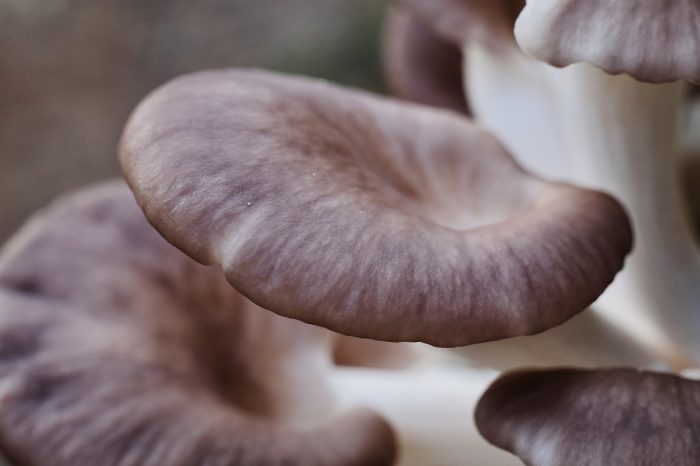
Oyster mushrooms are one of the more accessible species for beginning foragers. They grow in overlapping clusters on dead or dying hardwood trees, with fan-shaped caps that are white to grayish and gills that run down a short, offset stem. They have a mild, delicate flavor and cook beautifully in butter or olive oil.
The main caution with oyster mushrooms is the angel wing mushroom, a look-alike that some sources consider toxic. Angel wings are typically thinner, more brittle, and lack the offset stem of true oysters. When harvesting any wild oyster mushrooms, check that the gills are white to pale gray, the flesh is firm and white, and the mushroom has a pleasant mild scent.
True oyster mushrooms have a distinct fan-shaped or oyster-shell-like cap with a smooth, whitish-to-grayish surface. The caps can vary in size and may overlap or grow in clusters. False oyster mushrooms can vary in appearance but often have a somewhat similar fan-shaped or oyster-shell-like cap, which can be white to grayish. However, the shape, size, and color may differ from true oyster mushrooms.
True oyster mushrooms have gills that are white to pale gray and run down the stem. The gills are broad, closely spaced, and attach directly to the stem. False oyster mushrooms may have gills that are similar in appearance to true oyster mushrooms, but there can be variations in the spacing, attachment, or color of the gills.
The stem of true oyster mushrooms is often eccentric, meaning it is offset from the center of the cap. It is typically short, thick, and white. The stem of false oyster mushrooms can vary but may not have the eccentric, offset attachment characteristic of true oyster mushrooms.
True oyster mushrooms are often found growing on dead or dying hardwood trees, including oak, beech, and poplar. They are saprophytic, meaning they feed on decaying organic matter. False oyster mushrooms can grow in various habitats, including different types of trees and woodlands. The specific host trees and habitats may vary depending on the species.
True oyster mushrooms are considered one of the most popular and delicious edible mushrooms. They have a mild, sweet, and nutty flavor and are commonly used in culinary dishes. The edibility of false oyster mushrooms can vary by species. Some false oyster mushrooms are considered edible and safe to eat, while others may not be palatable or could potentially be toxic.
If you are unsure whether or not a mushroom is an oyster mushroom, it is best to err on the side of caution and leave it alone.
A Few General Mushroom Foraging Notes
When harvesting mushrooms, cut them at the base rather than pulling them up. Pulling disturbs the mycelium, the underground network the mushroom grows from, which can affect future fruiting.
Take only what you will use, leave some behind for wildlife and spore dispersal, and always cross-reference your identification with multiple sources before eating anything new.
Nuts
Acorns
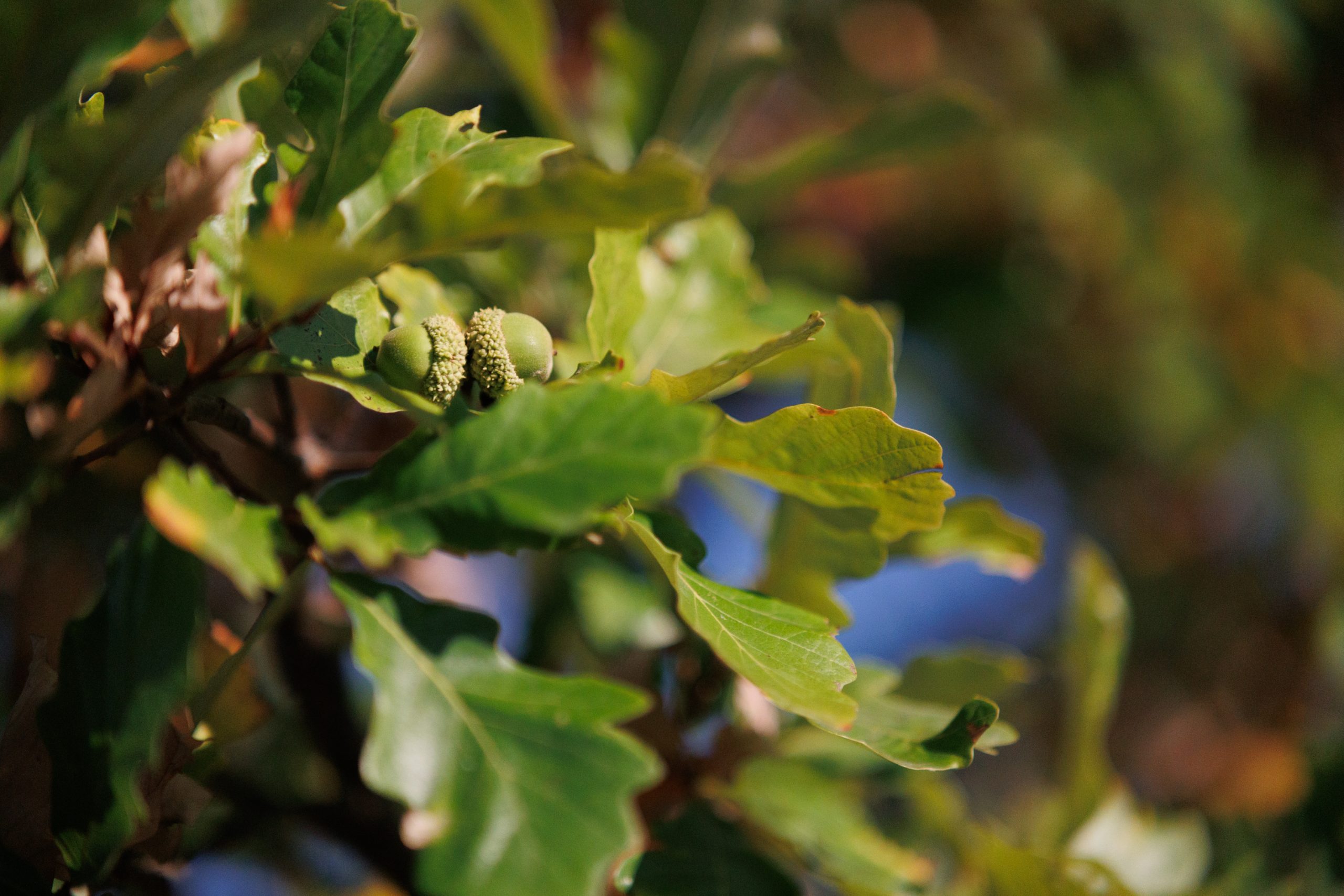
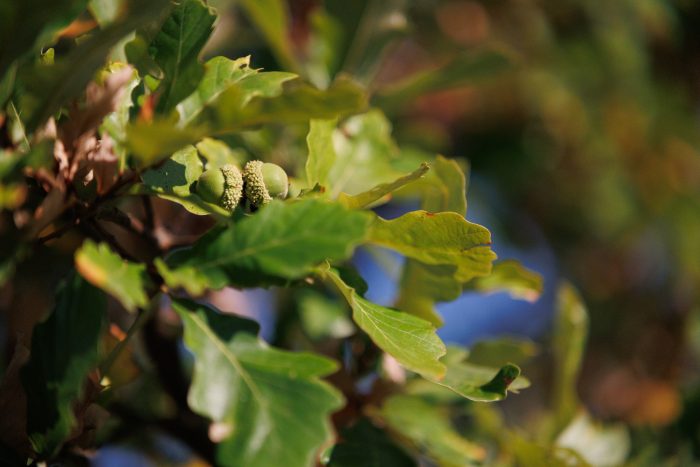
Acorns are one of the most abundant and underutilized wild foods in North America. Every oak tree produces them, and in a good mast year, the ground can be covered. The catch is that raw acorns contain tannins that make them bitter and, in large quantities, can interfere with digestion. They need to be processed before eating.
The traditional method is leaching. Shell the acorns, grind or chop them, and soak them in cold water, changing the water regularly until the bitterness is gone. This can take anywhere from a few hours to a few days, depending on the species and how much tannin is present. White oak acorns tend to be less bitter than red oak acorns and require less leaching.
Once leached, acorn meal can be dried and used as flour in baking, stirred into porridge, or used to thicken soups and stews. It is dense, slightly nutty, and nutritionally solid, high in complex carbohydrates, healthy fats, and B vitamins. Indigenous communities throughout North America relied on acorns as a staple food for centuries, and the processing techniques they developed are worth learning properly.
Hickory Nuts
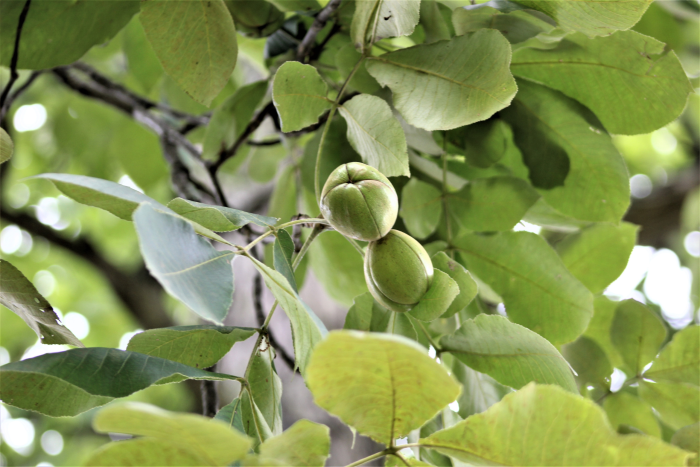
Shagbark hickory is the species most worth seeking out for foraging. The nuts have a sweet, rich flavor and a hard shell that requires some effort to crack, but rewards the work. Look for the distinctive shaggy, peeling bark that gives the tree its name, and harvest nuts that have already fallen and whose brown, four-lobed husks have begun to open.
Late August through October is the typical harvest window, depending on your region. Avoid bitternut, water hickory, and smoothbark hickory nuts, which are not worth eating.
Hickory nuts can be eaten raw, roasted at 350 degrees until golden and fragrant, ground into a paste, or used anywhere you would use walnuts or pecans in baking and cooking.
Chestnuts
The American chestnut was nearly wiped out by chestnut blight in the early 20th century and remains rare, but some blight-resistant trees and hybrids do exist. If you find them, the nuts are sweet and starchy with a creamy texture when roasted or boiled.
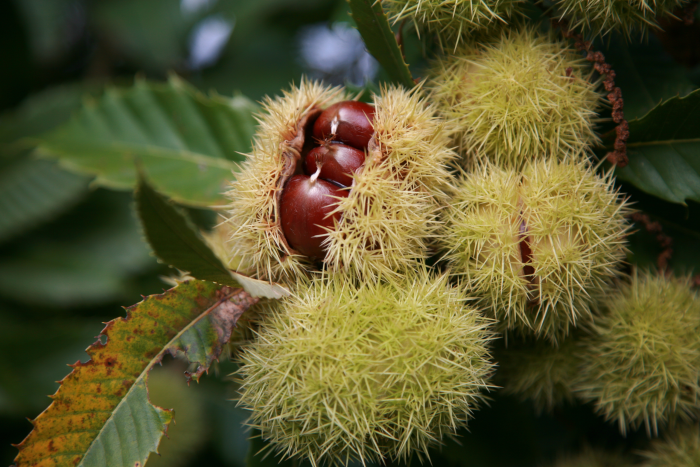
The important distinction to know is between American chestnuts and horse chestnuts, which are inedible and can cause illness. American chestnut burrs have slender, densely packed spines and typically contain two to three nuts. Horse chestnut husks have fewer, thicker spines and contain a single large, very shiny seed.
American chestnut leaves are alternate on the stem with a toothed edge. Horse chestnut leaves are opposite and compound, with five to seven leaflets radiating from a central point.
Hazelnuts (Filberts)
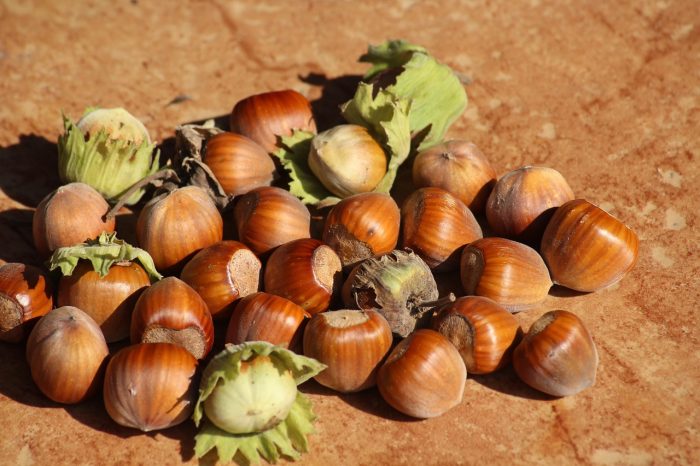
Hazelnut shrubs grow along forest edges, stream banks, and in open woodlands and are relatively easy to identify by their rounded leaves with a heart-shaped base and the distinctive papery husks that surround the nuts. Harvest nuts that have fallen naturally, as those still on the shrub may not be fully ripe.
Crack the hard shells to get to the kernel inside. Hazelnuts can be eaten raw, roasted for a deeper flavor, ground into nut butter, or used in baking. Store shelled hazelnuts in an airtight container in a cool, dry place.
Wild Fruits
Pawpaws
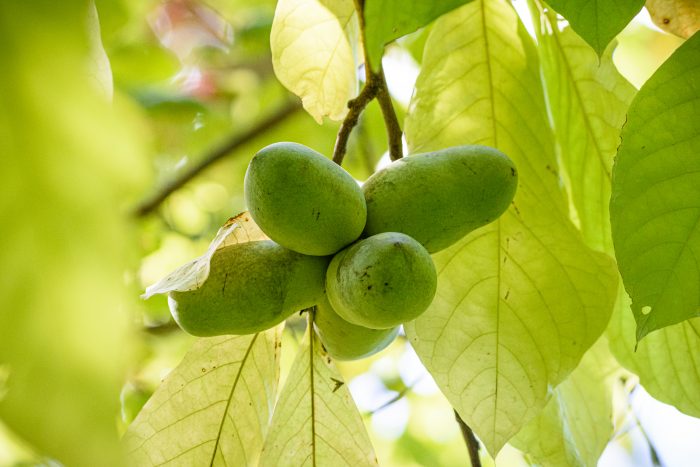
Pawpaws are native to the eastern and midwestern United States and are one of the most interesting wild fruits you can forage. They ripen from late August through September and grow in moist, shaded areas near rivers and streams, often in clusters since pawpaw trees tend to spread by root sprout and grow in groups.
The fruit is custard-like in texture and has a tropical, complex flavor, often described as a cross between banana, mango, and vanilla. They do not store well, which is part of why you seldom see them in grocery stores. Eat them fresh in the field, refrigerate for a few days, or freeze the pulp for longer storage.
Ripe pawpaws should be slightly soft and fragrant. If they are still firm, give them a few more days.
Growing your own food starts with knowing where to begin. Our free guide gets you started, and it connects you to a whole library of resources to grow your knowledge right alongside your garden.
Wild Plums
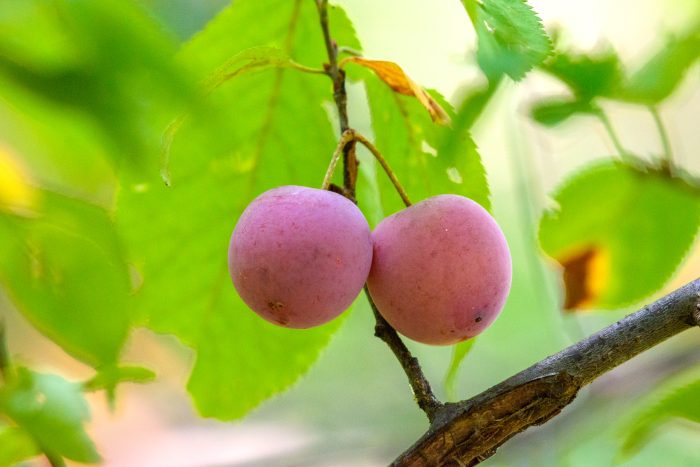
Wild plum trees grow in woodlands, meadows, and along the edges of fields and water. They are small to medium shrubs or trees with serrated, elliptical leaves and, in spring, clusters of white blossoms. By late summer and into fall, the fruits ripen to deep red or purple, small and round, tart and flavorful.
Wild plums are excellent eaten fresh off the tree, but they really shine when made into jam, jelly, or wine. Wash them thoroughly before eating and look for fruits that give slightly to pressure and have a strong, sweet aroma.
Rose Hips
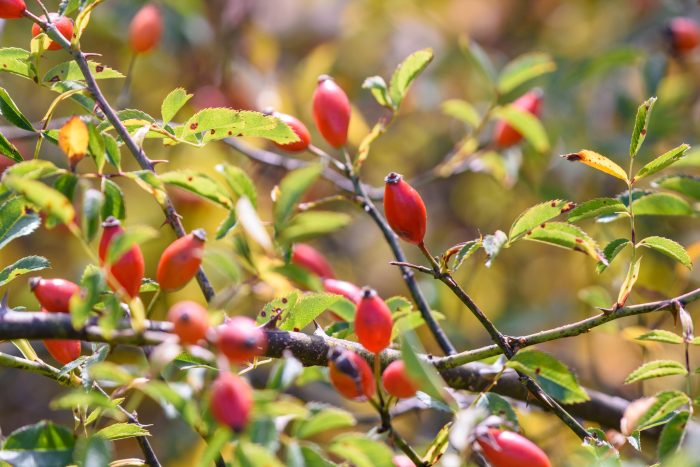
Rose hips are the fruit of rose bushes and are one of the most vitamin C-rich foods you can forage. They develop after the flowers fade and ripen to a deep red or orange in fall. Rosa canina and Rosa rugosa both produce large, easy-to-spot hips.
Harvest after the first frost if possible, as cold temperatures reduce some of the astringency and improve flavor. Snip them from the bush with scissors or pruning shears to avoid damaging the plant. Once home, rinse them, trim the ends, and remove the seeds and the fine hairs inside before using them, as the hairs can be irritating.
Rose hips make a beautiful tea; simply steep fresh or dried hips in hot water for five to ten minutes. They also work well in jams, syrups, and baked goods. Dry them for long-term storage.
Persimmons
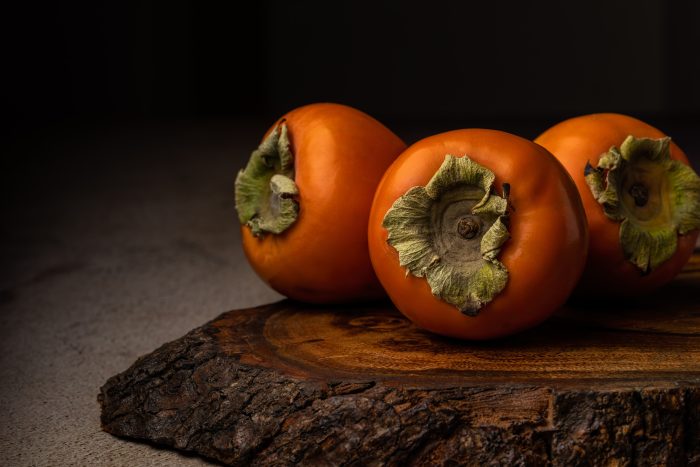
Wild persimmons are found across the eastern and southern United States, in woodlands, along roadsides, and at the edges of fields. They ripen in the fall and need to be fully ripe before eating. An underripe persimmon will leave your mouth dry and puckering from the tannins in a genuinely unpleasant way. A ripe one is soft, almost jammy, deeply sweet, and complex.
Wait until after the first frost if you can. Cold temperatures help break down tannins and considerably improve flavor. Ripe persimmons feel soft and yield easily to pressure. Eat them fresh, scoop out the pulp for baking, or use them in puddings, breads, and preserves. Refrigerate what you will use within a few days and freeze the rest.
Wild herbs and greens
Fall is not just for mushrooms and nuts. Many herbs actually intensify in flavor as temperatures drop, and cool-season greens are often at their nutritional peak in autumn.
Rosemary, thyme, sage, and mint are all worth harvesting in fall, either fresh for cooking or dried and stored for use through winter. Harvest in the morning after the dew has dried for the best flavor concentration.
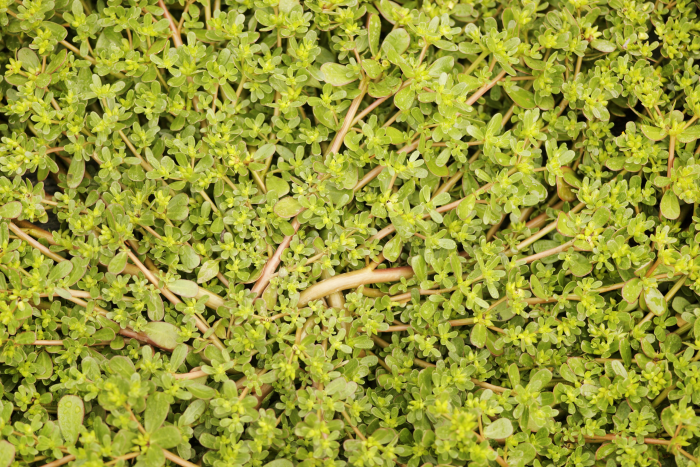
Autumn greens like dandelion, chickweed, lamb’s quarters, and purslane are still abundant and genuinely nutritious. Dandelion greens are more bitter in the fall than in spring, but hold up well in cooked dishes.
Chickweed is mild enough to use raw in salads. Always forage greens well away from areas that may have been sprayed, and wash everything thoroughly.
Before You Head Out
Bring a field guide specific to your region. A basket or breathable bag works better than a plastic bag for mushrooms, which need airflow. Carry a small knife for clean cuts. Take photographs of everything you find, even things you are not harvesting, because reviewing photos later helps build identification skills faster than anything else.
Go with someone experienced when you can. Local foraging groups, mycological societies, and naturalist clubs exist in most regions and are genuinely welcoming to beginners. There is no faster or safer way to learn than in the field with people who know what they are looking at.
Autumn is generous if you know how to receive it. Take your time, pay attention, and let the season teach you something.