Why We Should Avoid a Monoculture Lawn
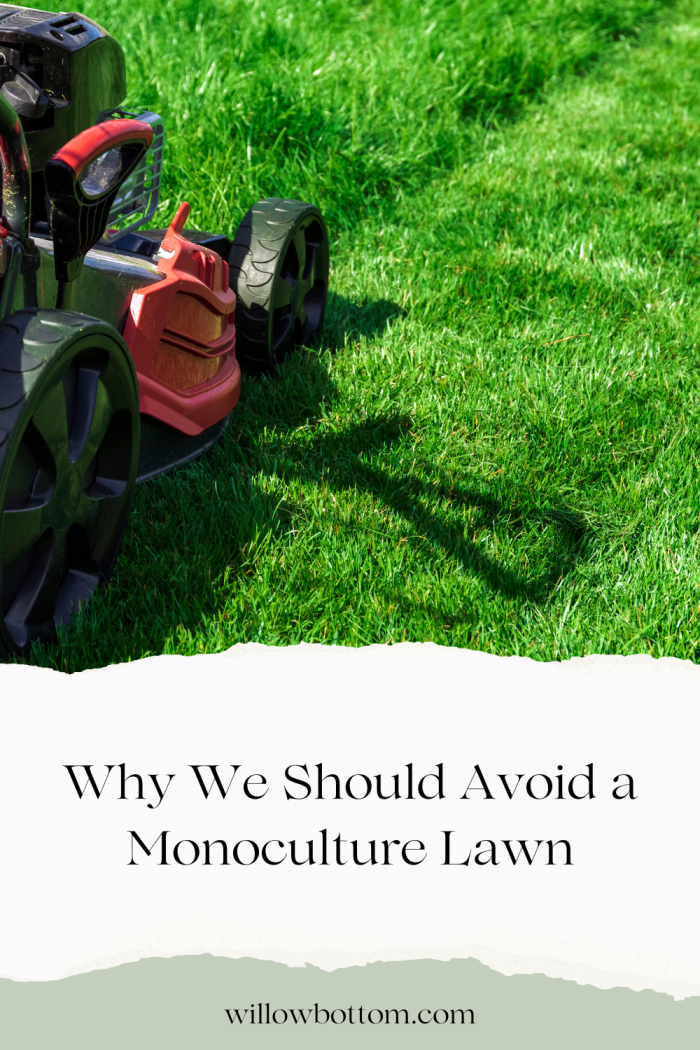
If you grew up in a suburban neighborhood, you probably grew up surrounded by monoculture lawns without ever knowing they were called that. The perfectly edged, uniformly green, not-a-weed-in-sight yard was just what a yard was supposed to look like. Neat and tidy was the standard. The goal, even.
That standard has a cost, and the more you learn about it, the harder it is to look at a chemically maintained, single-species grass lawn the same way.
How We Got Here
The monoculture lawn as we know it is not as old as it feels. Its roots go back to 17th-century Europe, where grand estates in France and England began featuring carefully managed grassy expanses as a display of wealth and status. Interestingly, those early landscapes were not true monocultures. They were closer to wildflower meadows, with a mix of grasses, herbs, and low-growing plants that looked intentional but supported far more life than today’s suburban lawn.
The shift toward uniformity came gradually. In the 18th century, English landscape architects began emphasizing open, manicured green space as a design ideal. By the 19th century, that ideal crossed the Atlantic, and American landscape architects started promoting what they called “pleasure grounds,” tidy grass-covered spaces surrounding homes that signaled order, prosperity, and good taste.
The lawn mower made this achievable for average homeowners, not just estates, and then suburbanization in the 20th century turned the monoculture lawn into a cultural expectation. After World War II, the chemical industry moved in with fertilizers, herbicides, and pesticides, and advertising campaigns sold the idea of the perfect lawn hard. A flawless emerald carpet became something people actively pursued, often without questioning why.
That history matters because it explains why the monoculture lawn feels so normal. It is a relatively recent invention, and it was marketed into existence.
Also Read: The Benefits Of Planting Native Plants On Your Property
What a Monoculture Lawn Actually Costs
The most obvious issue is water. Keeping a single species of grass green and lush, especially through summer heat, requires a significant amount of irrigation. In areas already dealing with water scarcity, residential lawn irrigation puts real strain on local water supplies and ecosystems.
Then there are the chemicals. Fertilizers, herbicides, and pesticides are applied routinely to monoculture lawns, and they do not stay put. They leach into groundwater, run off into nearby streams and water bodies, and accumulate in soil. This contributes to water pollution and can disrupt the health of surrounding ecosystems well beyond your property line.
From a biodiversity standpoint, a monoculture lawn is essentially a biological desert. A single species of grass provides almost nothing for pollinators, beneficial insects, birds, or small mammals. There is no food source, no shelter, no nesting habitat. The pesticides used to maintain it actively harm bees, butterflies, and beetles, the very insects doing essential work in and around your yard. When those populations decline, the effects ripple outward.

Growing your own food starts with knowing where to begin. Our free guide gets you started, and it connects you to a whole library of resources to grow your knowledge right alongside your garden.
The soil under a heavily maintained monoculture lawn suffers too. Constant mowing, compaction from foot traffic and equipment, and chemical inputs reduce microbial diversity and disrupt the underground ecosystem that healthy soil depends on, and because a monoculture lawn stores very little carbon compared to a diverse planting of grasses, wildflowers, shrubs, and trees, it contributes nothing to mitigating climate change, essentially.
There is also a direct human health dimension worth naming. Children and pets who spend time on lawns treated with pesticides and herbicides are exposed to those chemicals through skin contact, inhalation, and tracking them indoors. The research connecting certain lawn chemicals to health concerns, particularly for children, has been building for decades.
What to Do Instead
The good news is that breaking away from the monoculture lawn does not mean letting your yard go wild and unmanaged. A diverse landscape can be just as intentional and beautiful, and considerably more alive.
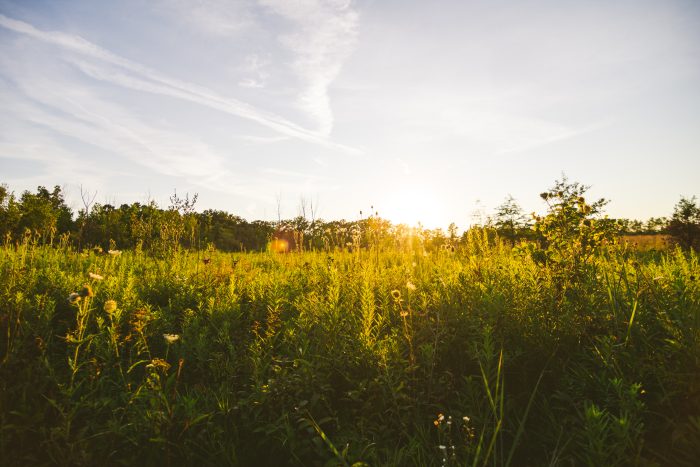
A yard that includes a mix of native grasses, wildflowers, ground covers, shrubs, and trees creates habitat and food sources for pollinators, birds, and insects. It supports biodiversity instead of working against it. It requires fewer chemical inputs, often less water once established, and in many cases less overall maintenance because you are working with the natural tendencies of your plants rather than constantly fighting them.
Practically, this can look like a lot of different things depending on your space and your goals. Replacing sections of lawn with native plantings or pollinator gardens is a starting point. Letting clover grow in your grass rather than treating it as a weed is a small change with a meaningful impact, since clover is an excellent food source for bees and fixes nitrogen in the soil naturally. Leaving leaf litter in place rather than removing it supports overwintering insects and adds organic matter back to the soil.
Even small shifts matter. You do not have to tear out your entire yard to make a difference. Starting with one section, one garden bed, one decision to put down the herbicide, is how most of this change actually happens.
The monoculture lawn has been sold to us as the responsible, tidy, neighborly choice, but increasingly, more people are recognizing that a yard full of life, even if it looks a little different from the one next door, is far more responsible than a chemically maintained monoculture that costs the ecosystem more than it gives back.