Maintaining your garden through the growing season
Planting is the exciting part. The satisfying part, though, comes from keeping things alive.
Maintaining a garden through the growing season isn’t glamorous work; it’s showing up consistently, paying attention, and learning what your plants are trying to tell you, but the payoff, pulling fresh food from the ground that you grew yourself, is unlike anything you can get from a grocery store.
Here’s how we approach it, season by season.
Maintaining your garden – Spring
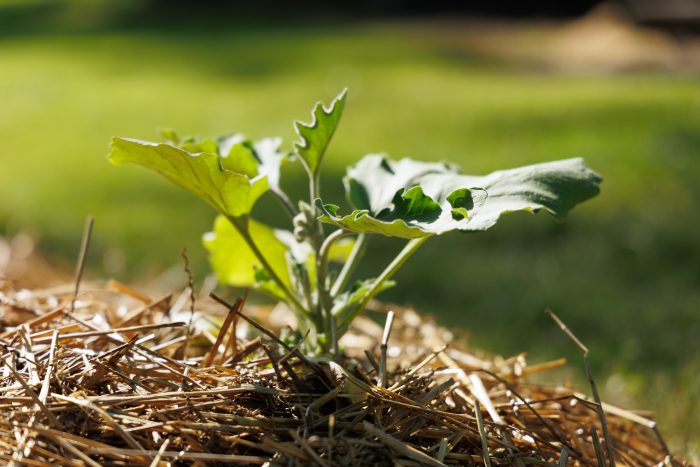
Spring is equal parts excitement and patience. Before anything goes in the ground, we prep our beds by amending the soil with compost and organic matter like leaves from the previous season. It’s not the most thrilling step, but healthy soil is everything.
This is also the time to think through your layout.
Where are you rotating crops from last year?
What’s going where, and what grows well together?
We practice companion planting, so this planning stage matters more than people realize.
If you’re growing tomatoes, peppers, or cucumbers, now is the time to get those seeds started indoors. They need a head start before outdoor temps are ready for them. Usually, transplanting happens late spring to early summer, depending on your climate. Cold-hardy crops like peas, lettuce, and radishes can go directly in the ground much earlier, as soon as the soil is workable.
That said, every climate is different. Do a little research on your local last frost date and the specific needs of what you’re growing. It makes a real difference.
Summer
Summer is the season of staying on top of things. The heat speeds everything up, including problems.
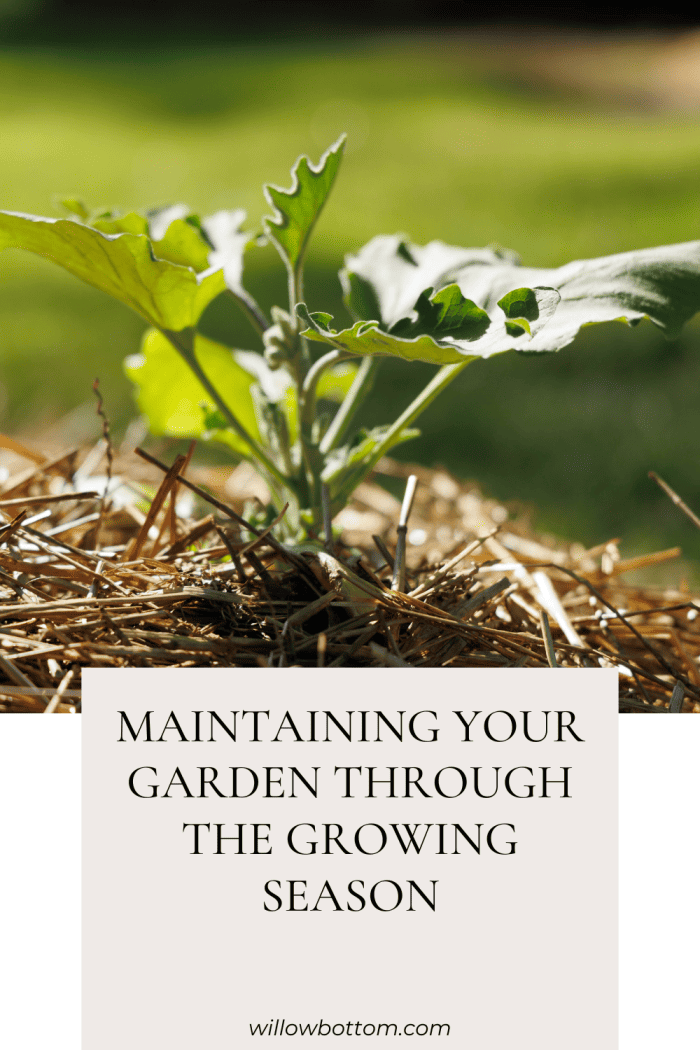
Watering becomes your main job. Water deeply rather than frequently, so roots are encouraged to grow down, and water early in the morning so the soil can absorb it before the heat of the day kicks in. A thick layer of mulch helps retain moisture, regulate soil temperature, and keep weeds manageable.
Check your plants regularly for signs of pests or disease. Catching something early makes it much easier to deal with. We stick to eco-friendly methods, more on that below, so the rest of the garden stays healthy in the process.
Autumn
Autumn in the garden feels like a slow exhale. Growth is winding down, days are getting shorter, and it’s time to start transitioning.
Keep watering as needed, but ease up as plants slow down. We start cleaning out spent crops, though we don’t remove everything. A lot of what’s finished gets left in place to decompose back into the soil over winter. Free nutrients, free work.
If you have perennials like asparagus, rhubarb, or artichokes, this is a good time to appreciate them. They’ll come back on their own year after year with minimal intervention. Asparagus can produce for up to 15 years. Rhubarb pretty much thrives on neglect. Kale, parsley, and cilantro also tend to return in a lot of climates.
Winter
Winter is planning season. We look back at what worked, what failed, and what we’d do differently. It’s also when we clean and store our tools properly so they’re in good shape come spring.
If you have fruit trees, winter is a good time to prune out any dead or damaged branches. Use sharp, clean tools and make your cuts just outside the branch collar. How and when you prune depends on the variety, so it’s worth looking up what’s best for what you’re growing specifically.
For tender plants that can’t handle a hard freeze, consider wrapping or insulating them, and don’t forget to water evergreens during dry stretches when the ground isn’t frozen. They’re still losing moisture even when everything looks dormant.
Pest Control
We don’t use chemical pesticides because we’ve seen what happens to the beneficial insects when we do, and it’s not worth it.
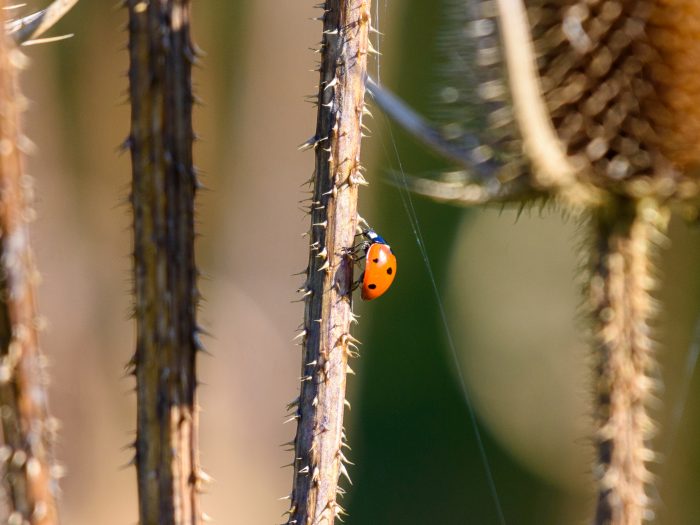
Ladybugs, bees, lacewings, and parasitic wasps are the ones working hard to keep your garden balanced. Spraying to kill pests often takes them out too.
Instead, here’s what actually works for us:
Companion planting. Marigolds repel aphids and nematodes. Basil discourages flies and mosquitoes. Planting thoughtfully can reduce your pest pressure before it starts.
Physical barriers. Row covers, netting, and other barriers work well for caterpillars, birds, and anything that’s coming in from above.
Crop rotation. Moving your crops each year disrupts pest life cycles and prevents soil-borne disease from building up in one spot.
Homemade sprays. Garlic, onion, chili pepper, or a little dish soap diluted in water can help deter pests without harming the beneficial ones. We’ve also had good results with orange peel water. Soak citrus peels for a few days and spray directly on plants. Just make sure your citrus is pesticide-free before you do this.
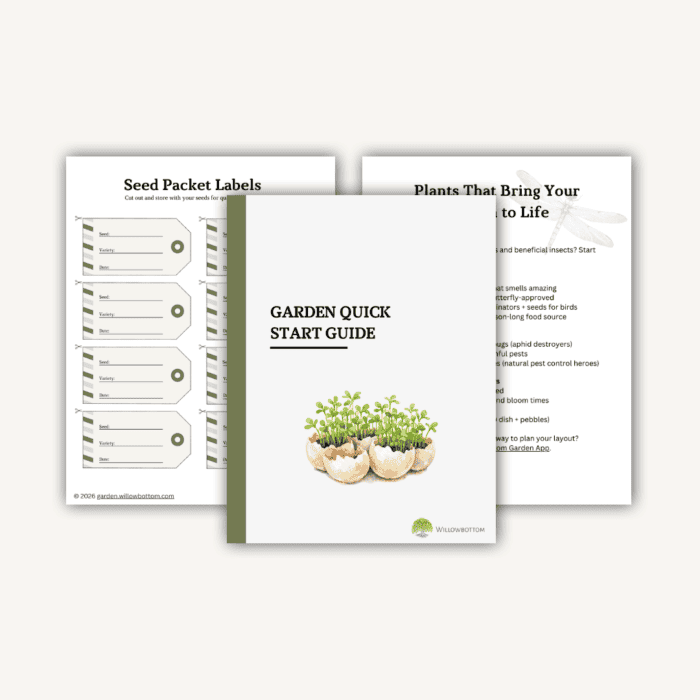
Growing your own food starts with knowing where to begin. Our free guide gets you started, and it connects you to a whole library of resources to grow your knowledge right alongside your garden.
Homemade Fertilizers
Store-bought fertilizers aren’t necessary when you’ve got a little creativity and a compost pile.
Here are some of our favorites:
Compost. The best and most obvious one. Kitchen scraps, yard waste, organic material, all of it breaks down into something your garden absolutely loves.
Manure tea. Soak well-rotted manure in water, dilute it, and use it to water your plants. A little goes a long way.
Crushed eggshells. Let them dry, crush them up, and work them into the soil around your plants. Great source of calcium.
Banana peel fertilizer. Chop up banana peels and bury them near your plants. As they break down, they release potassium.
Aquarium water. If you have a fish tank, that water is full of beneficial nutrients. Use it on your garden instead of dumping it. Just avoid using it if ammonia or nitrite levels are high.
Weed tea. Dandelions, nettles, and comfrey are nutrient-dense, and you can put them to work. Soak them in water for several weeks, strain out the plant material, and use the liquid as a fertilizer. It’s a bit funky-smelling, but it works.
Use these in moderation and pay attention to what your specific plants need. Not everything wants the same thing.
Harvesting
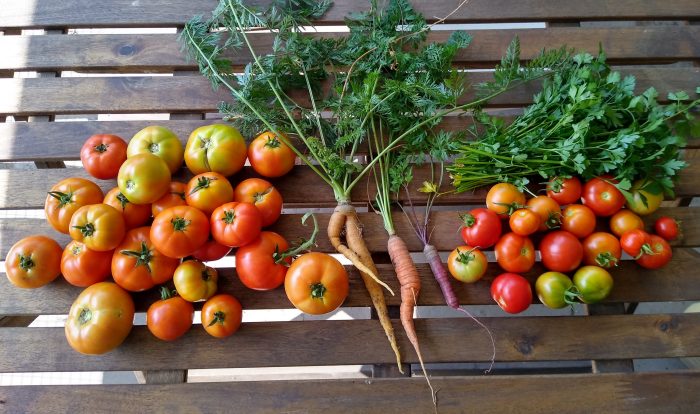
Timing is everything with harvesting. Too early and you miss peak flavor. Too late, and quality drops fast. Get to know what “ready” looks like for each crop you’re growing.
When you harvest, be gentle and use clean, sharp tools. While you’re at it, look for any dying branches or leaves and prune them back so the plant can redirect its energy into healthy growth.
There’s something that never quite gets old about picking food from your own garden. You know exactly what went into it, and nothing from a store comes close.
Saving Seeds
Saving seeds is one of the most satisfying things you can do in the garden. It saves money and keeps you connected to the full cycle of growing.
Stick to open-pollinated or heirloom varieties for seed saving. Hybrids don’t reliably pass on their traits to the next generation.
Let the vegetables you’re saving from fully mature on the plant, sometimes past the point you’d normally harvest them. Beans and peas should be left until the pods dry out on the vine. Tomatoes should be fully ripe.
Once you harvest the seeds, clean off any pulp, rinse them, and let them dry completely. Some seeds, like cucumber and squash, benefit from a few days of fermenting in water to remove their coating before drying.
Label everything with the plant name, variety, and date. Store in paper envelopes or glass jars in a cool, dry place. Completely dry before sealing, or you risk mold. A stable environment with low humidity is ideal, and some people store seeds in the fridge or freezer to extend viability.
Maintaining a garden is a lot of small, consistent actions. It’s not one big dramatic effort; it’s just showing up through each season and learning as you go. The rewards, fresh food, a healthier ecosystem, and that quiet sense of accomplishment make it absolutely worth it.